
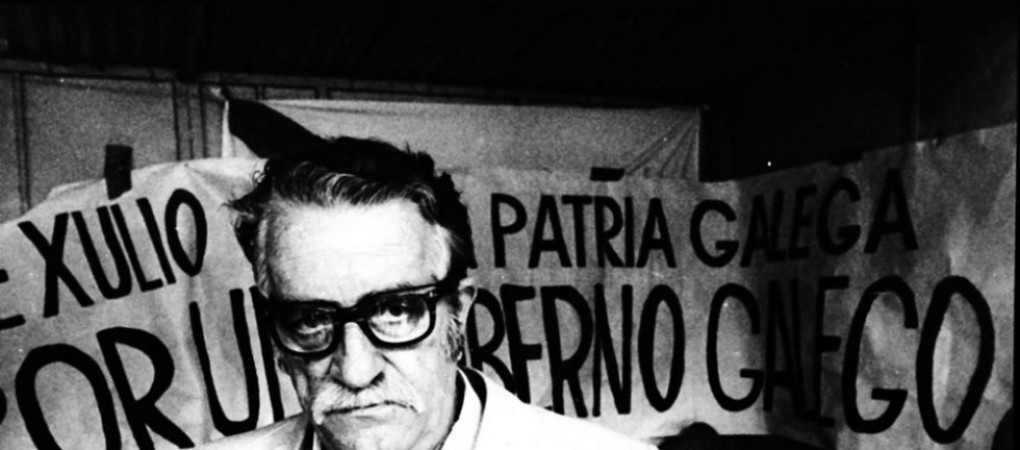
1940-1950 Pontevedra
1912-1936 1936-1940 1940-1950 1950-1966 1966-1973 1973-1979
OS DUROS ANOS PONTEVEDRESES, A PRIMEIRA POSGUERRA
Celso Emilio Ferreiro oposita e gaña o posto de secretario e logo de xefe de Xustiza na Fiscalía de Taxas de Pontevedra, onde traballou entre 1941 e 1950. Esta será a época na que escribirá poemas, contos e artigos, integrarase intensamente na vida cultural da cidade e frecuentará os faladoiros do Carabela e do Imperial, entre outros.
En 1941 publica o seu poemario castelán Al aire de tu vuelo, singular libro de noivado con poemas amorosos escritos dende 1938, moi influídos polos poetas da xeración do 27 española. Tamén en 1947, en Edicións Céltiga publica Bailadas, cantigas e donaires, poemas neopopularistas prologados por Bouza-Brey.
Colabora en Sonata Gallega (1944-1952), revista dirixida por Ramón Peña; nela consta desde o seu segundo número como coordinador das «Seleccións literarias».
Tamén é redactor xefe en Finisterre (1943-1946), revista dirixida por Emilio Canda. Escribe abondosas prosas no semanario pontevedrés Ciudad e noutros soportes como Mar, Guía Anuario de Pontevedra e Mensajes de Poesía de Vigo.
Entre setembro de 1948 e xullo de 1949, colabora coas emisións radiofónicas do Galician Programme da B.B.C. de Londres, que coordinaba Francisco Fernández del Riego.
En 1949, Celso Emilio é chamado por Sabino Torres Ferrer para que, xunto con Emilio Álvarez Negreira e Manuel Cuña Novás leven adiante a colección Benito Soto de poesía, primeira empresa editorial que daría a coñecer poemarios en galego na posguerra, entre eles Musa alemá (1951), escolma de quince poemas de poetas alemáns como Hölderlin, Dehmel, Rilke, Heine, Miegel e Werfel, traducidos por Antonio Blanco Freijeiro e versionados polo propio Celso Emilio.
Poema relacionado: Vintecinco anos de paz
España, sangue e area:
trinta millós de farrapos
atados a unha cadea.
Todos levan sobre a faz
un carimbo de tristura:
vintecinco anos de paz.
Paz de cuartel, paz de preso,
paz de pobo asoballado,
paz de pau e tente teso.
Paz do conde de Fenosa,
gran cabaleiro da industria
que asulaga a terra nosa.
Paz de osario e cimenterio,
paz de chaira inhabitada,
paz de oprobio e cautiverio.
Paz de mazmorra e censura,
paz de mansos periodistas
lambecús da dictadura.
Paz de roubo financiado,
paz de pulpo monopolio,
paz de fusil apuntado.
Paz de bispo troglodita,
solideo insolidario,
don Oppas hermafrodita.
España, sangue e area:
trinta millós de pantasmas
van pasando en estadea.


